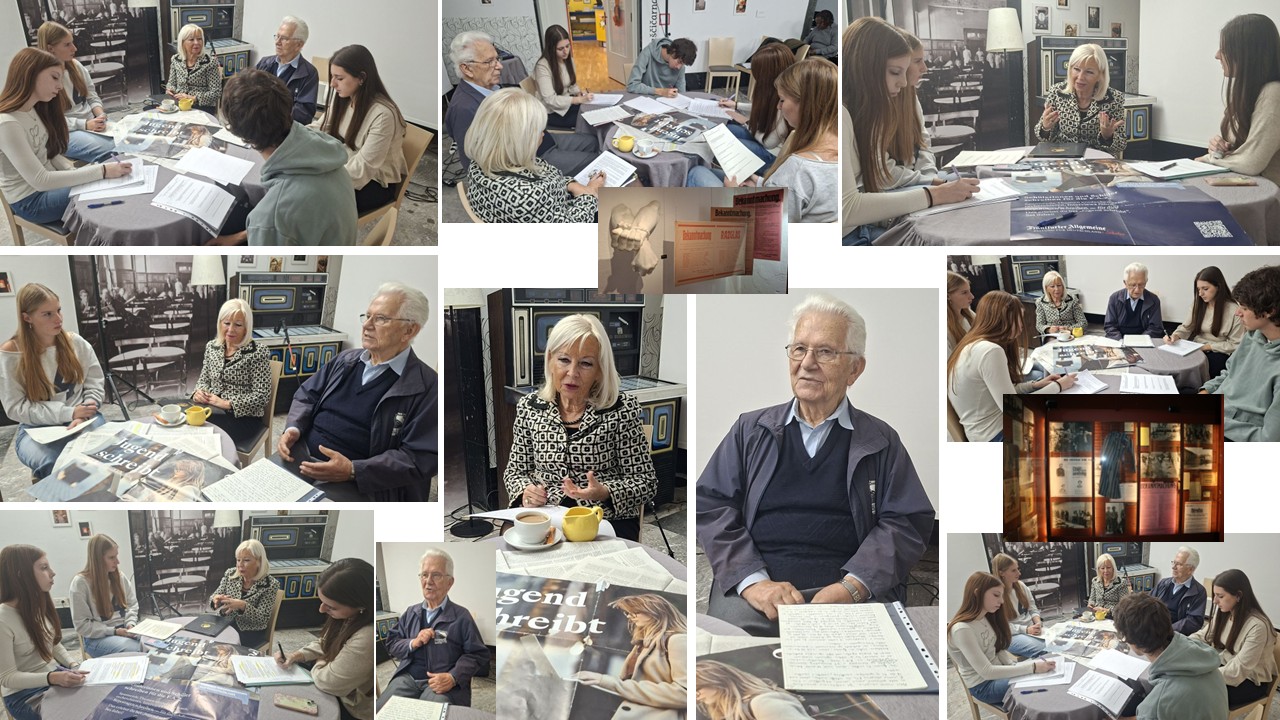
Experience history – The fate of children; An encounter an with an eyewitness:
Of course, Janez Žmavc (94), the ‘father of Slovenian road construction technology’, was once a child too. In 1942, aged 10, he was among a group of people – including children and young people ranging in age from a few months to 18 years – who were arrested as part of secret measures taken by the German occupying forces to suppress resistance against the occupation regime and taken to a transit camp in Celje. On 20 September 1942, they were deported from Celje to specially established camps in the German Reich for ‘re-education and Germanisation’, whilst their mothers were sent to the Auschwitz concentration and extermination camp. Janez Žmavc is one of the still living ‘stolen children’.
Back in Slovenia, he completed his A-levels, went on to have a distinguished career in road construction technology, and served for many years as president of the ‘Association of Former Camp Inmates – Stolen Children’, a role now taken over by Aleksandra Hribar, herself the ‘child of a stolen child’.
How does a child experience and survive such circumstances? How does this shape the rest of their life? What about their own children and grandchildren? Given this background, how does a person view wars and the fate of children today?
These are just some of the questions posed by Zoja Klara Hrup, Ana Delić, Anja Zupanc Mastnak and Maks Vasle from Celje during a discussion with Janez Žamvc and Aleksandra Hribar on 4 November 2026 at the Museum of Contemporary History in Celje.
A project as part of „Jugend schreibt“ (Youth writes) with Frankfurter Allgemeine Zeitung/FAZ; under the patronage of the Municipality of Celje; Project management/Photos (c): INSTITUT DISCIMUS LAB.